Food & Dining in Cajamarca

Peru's dairy heartland, and a highland kitchen built on corn, potatoes, and cheese.

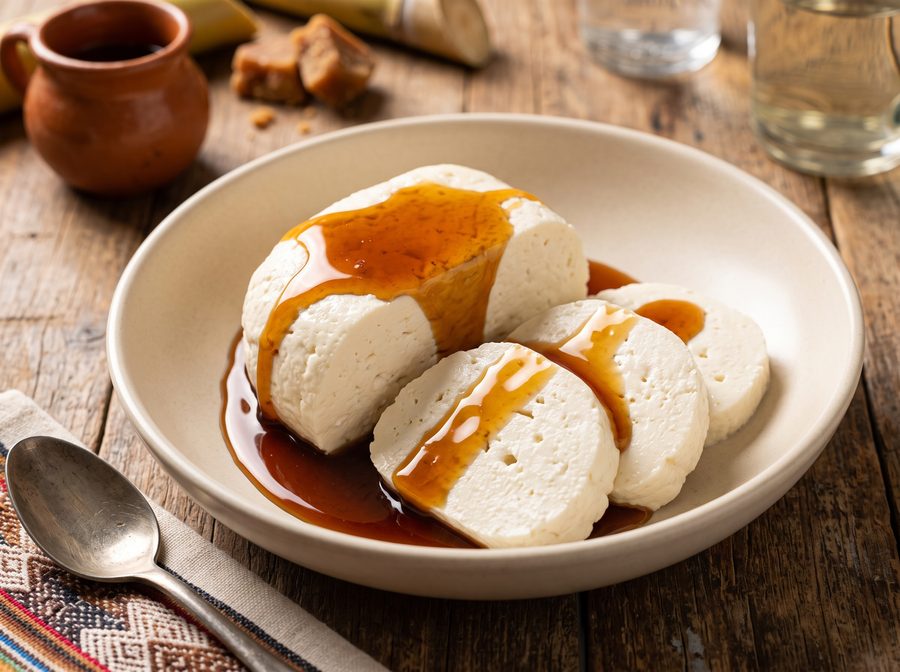
A countrywoman in Cajamarca pouring dark cane syrup, the miel poured over fresh quesillo

Eat Where the Valley Eats

Cajamarca is cattle country. The green valley around the city produces a large share of Peru's cheese, butter, and manjarblanco, and that shows up in almost everything on a plate here: cheese stirred into the breakfast soup, cheese sold by the kilo in the market, cane syrup poured over fresh curd for dessert.

The rest of the kitchen is highland Andean: corn, potatoes, wheat, pork, and slow soups that suit a place where the temperature drops as soon as the sun goes. Portions are generous and lunch is the main meal of the day.

The city's markets are the most reliable place to eat the regional dishes as locals actually eat them, at stalls that cook one or two things and cook them all day.

Dishes to Look For

Regional highland cooking rather than the coastal Peruvian food most visitors arrive already knowing.
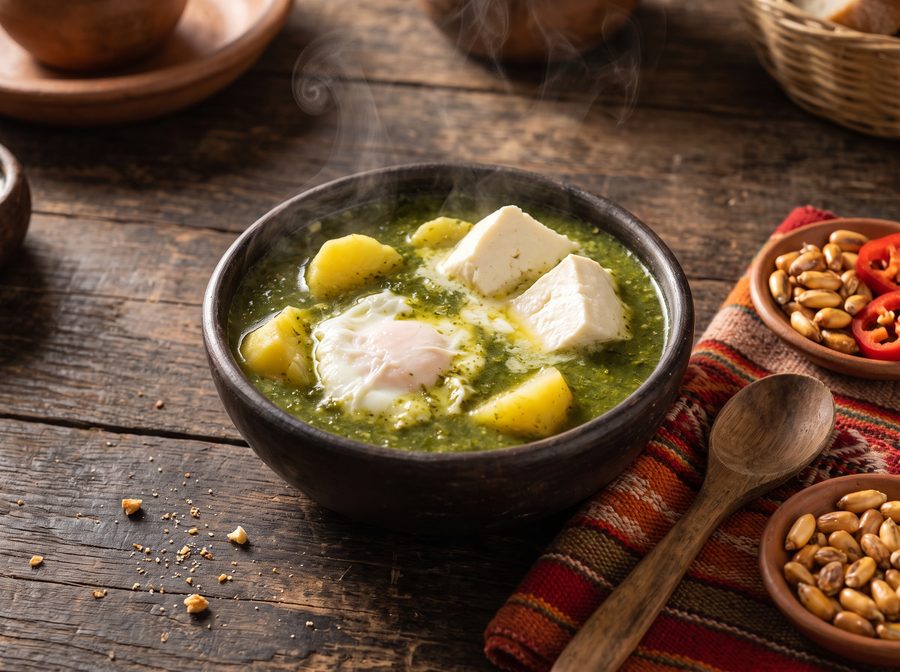
A bowl of caldo verde, the green potato and herb broth eaten at breakfast in Cajamarca

Caldo verde

The regional breakfast. A potato broth coloured green by paico, an Andean herb, usually served with a poached egg and fresh cheese stirred through. Eaten early and eaten hot, it is what the valley starts a cold morning with.

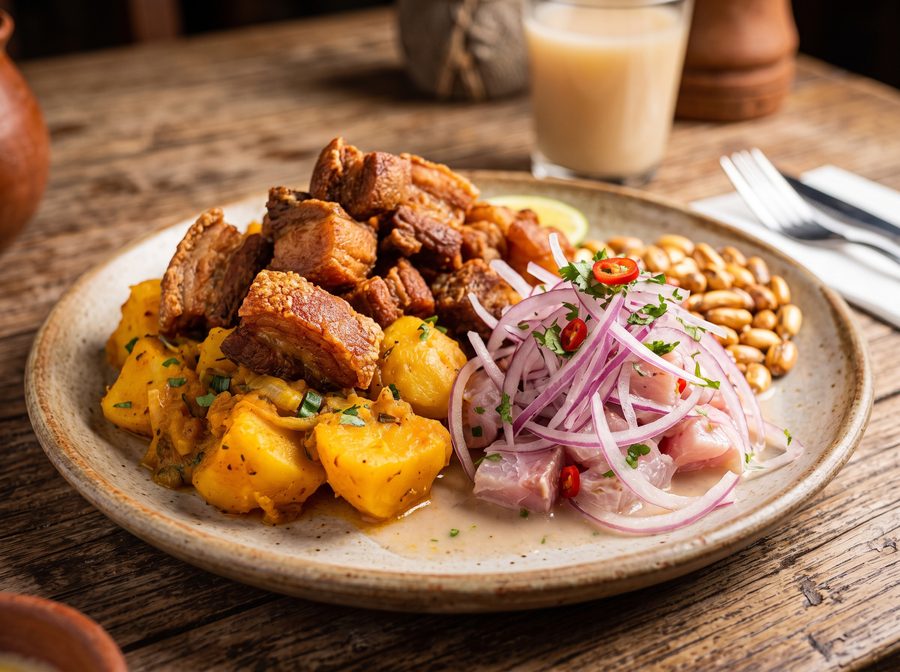
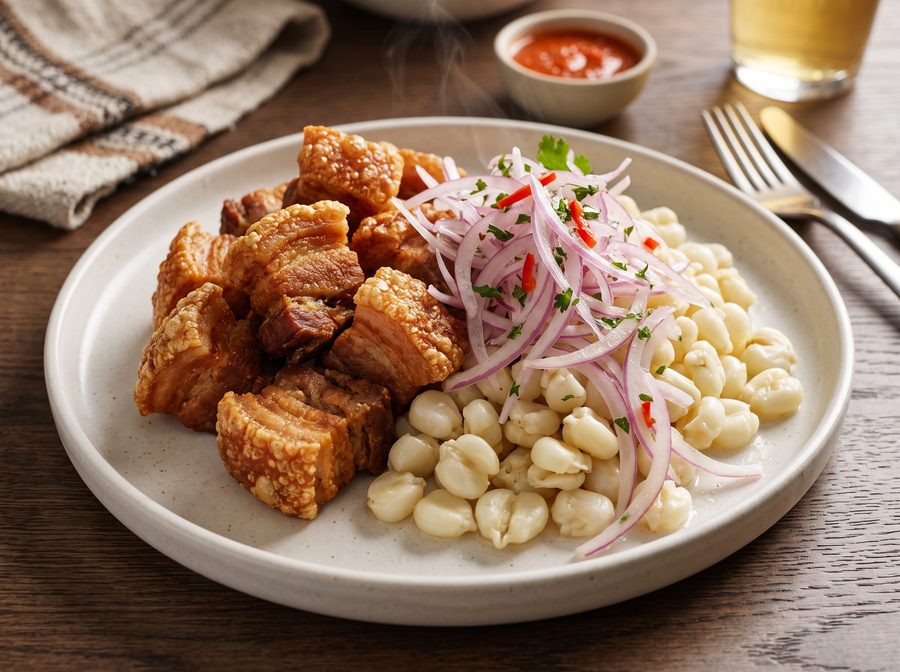
Fried pork chicharron served with mote, large boiled hominy corn kernels

Chicharron con mote

Pork fried until the edges shatter, served with mote, large hominy corn kernels boiled soft, and a raw onion salsa. A market dish more than a restaurant dish, and best where you can see the pan.

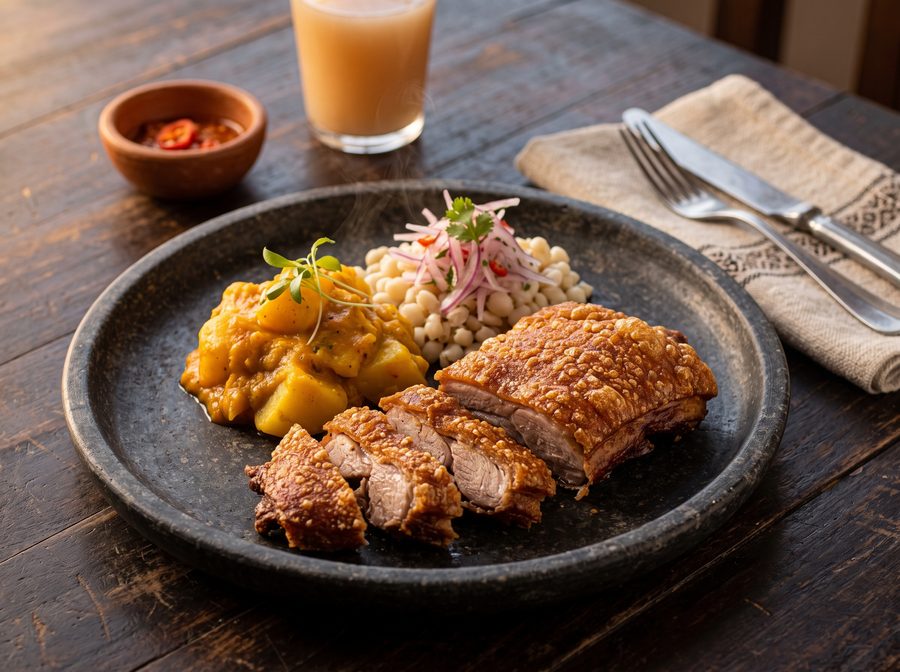
El frito cajamarquino, pork fried in its own fat and served with mote

El frito cajamarquino

The city's own fried pork: cuts simmered first, then fried in their own fat until the outside crisps, served with mote and a sharp raw onion salsa. Traditionally a morning dish rather than a dinner one, sold early from the markets and the picanterias around the centre.

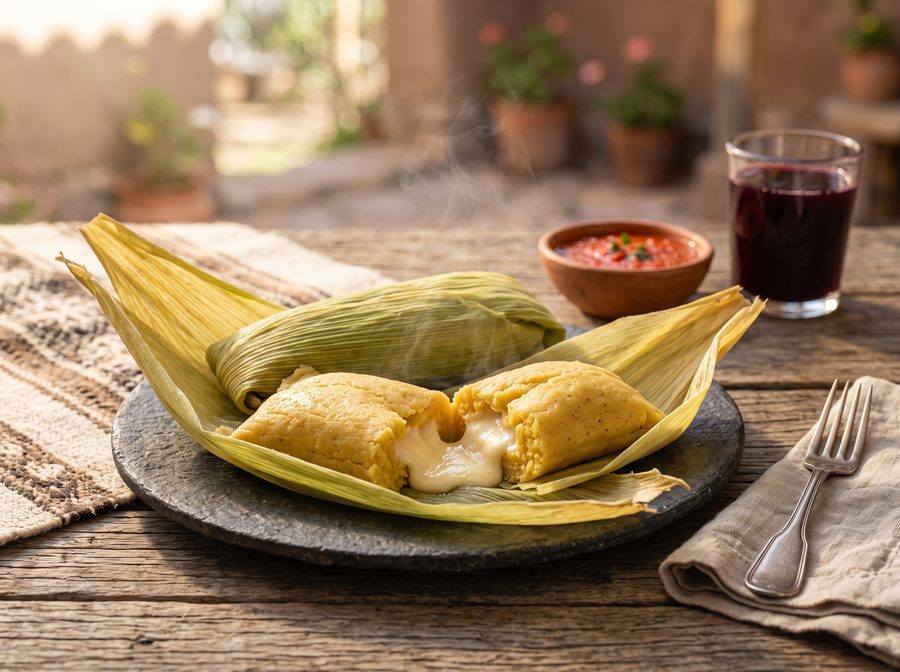
Humitas, fresh corn paste steamed in its own husk, served with cheese

Humitas

Fresh corn ground to a paste, wrapped in its own husk and steamed. Made both savoury and sweet, so it is worth asking which one you are being handed.

Cuy, the Andean guinea pig dish, served fried with potatoes

Cuy

Guinea pig, an Andean staple long before the Spanish arrived, served fried or in a chilli-based stew. It appears on menus across the highlands and Cajamarca is no exception. Order it if you are curious; nobody will push it on you if you are not.

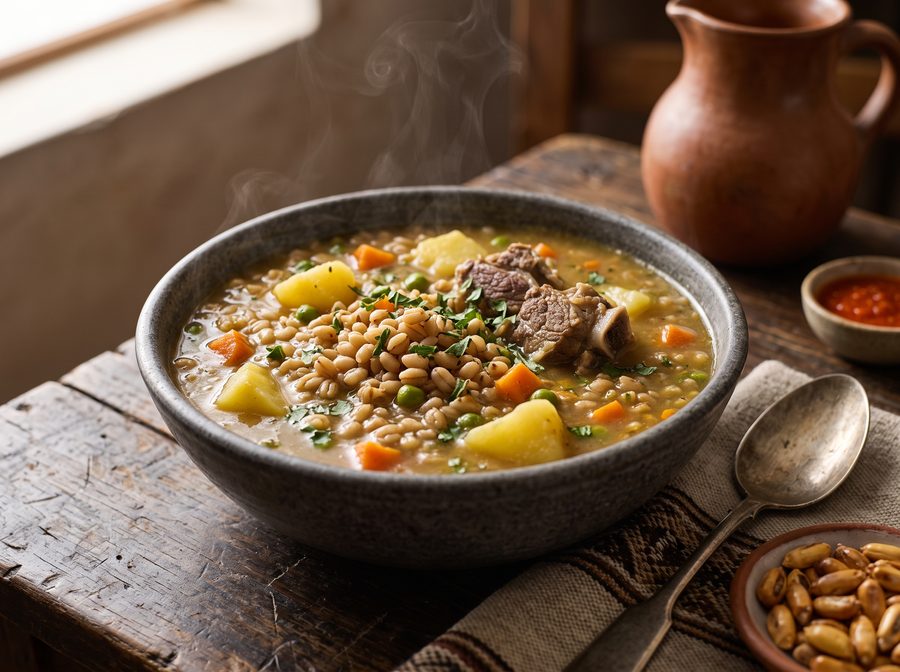
A bowl of sopa de trigo, the wheat berry soup eaten at midday

Sopa de trigo

Wheat berry soup with vegetables and whatever meat is on hand. Plain, filling, and everywhere, the sort of thing eaten at midday rather than sought out.

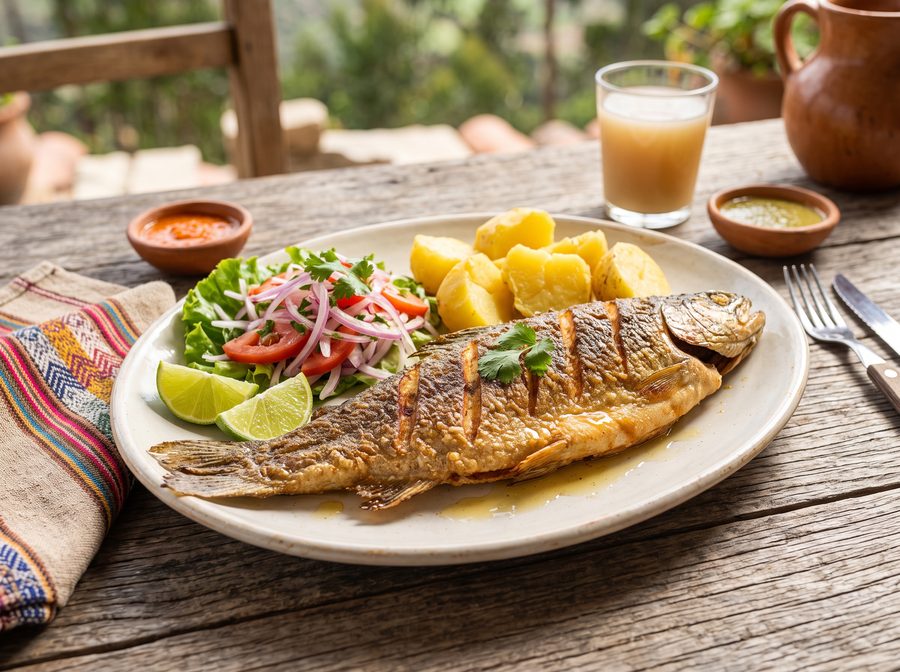
Fried whole trout, farmed in the cold streams around Cajamarca

Trucha

Trout, farmed in the cold streams around the region and usually served fried whole. A common lunch stop on the way back from the sites outside the city.

The Dairy

The one thing the region is best known for across the rest of Peru.
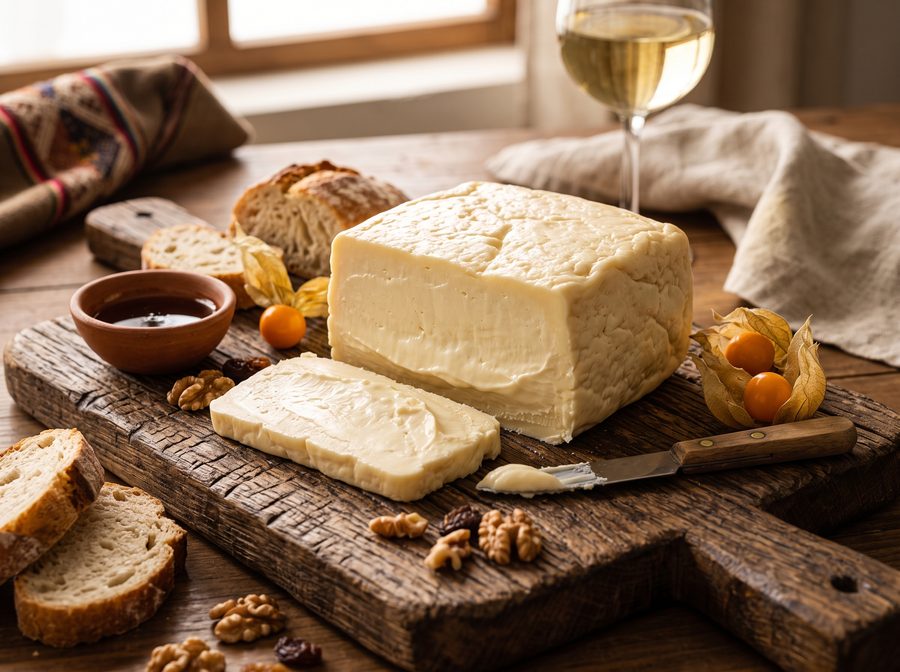
Queso mantecoso, the soft buttery cheese Cajamarca is known for across Peru

Queso mantecoso

The cheese Cajamarca is known for nationally. Soft, pale, and buttery enough to spread. The name means roughly "buttery cheese". Sold by weight in the markets and in the cheese shops around the centre.

Fresh quesillo curd cheese with dark cane syrup poured over it

Quesillo con miel

Fresh curd cheese eaten with dark cane syrup poured over it. The classic pairing of the region and the simplest possible dessert.

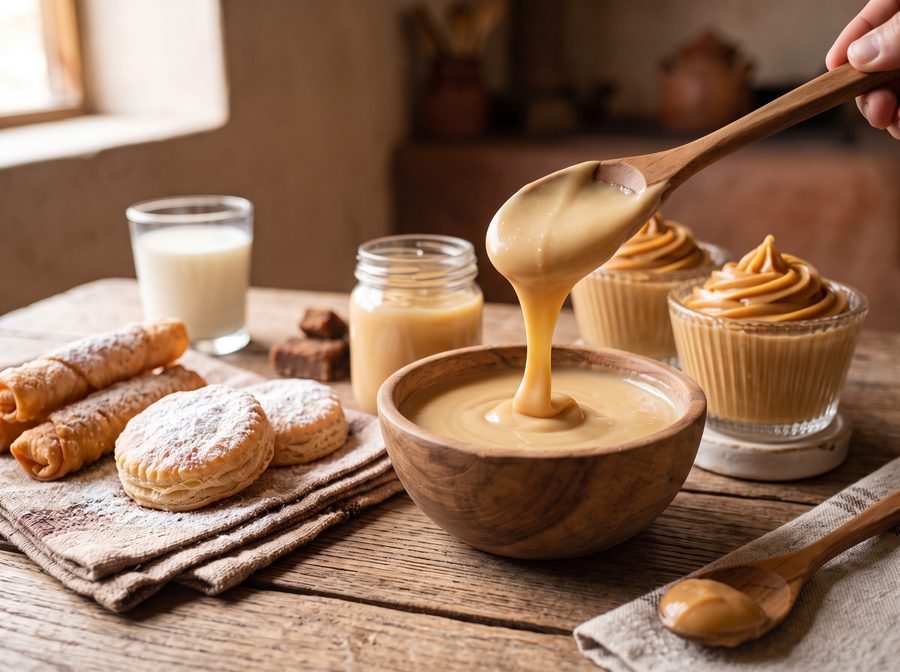
Manjarblanco, milk and sugar cooked down slowly until thick and caramelised

Manjarblanco

Milk and sugar cooked down slowly until thick and caramelised. Sold in tubs and jars, folded into pastries, and given as the standard souvenir from a trip here.

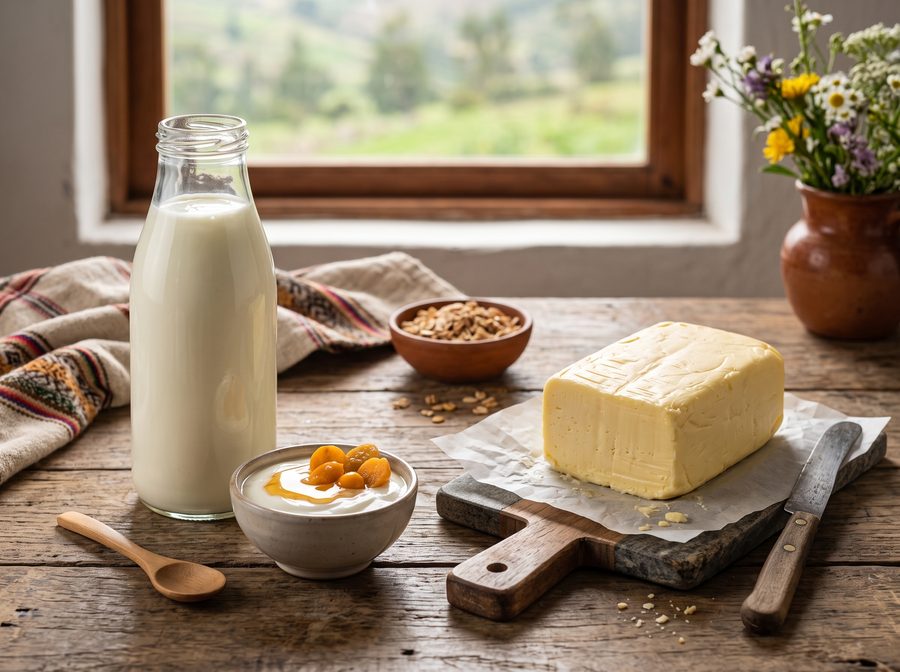
Yoghurt and butter from the Cajamarca valley, Peru's dairy heartland

Yoghurt and butter

The valley is Peru's dairy heartland and its dairy is sold well beyond the region. If you buy one thing to take home, it comes from this list rather than the dish list.

Practical Notes

Lunch is the main meal

Midday is when kitchens are busiest and when set menus appear. Evenings are quieter, and smaller places close earlier than visitors from larger cities expect.

Carry cash

Markets, stalls, and small restaurants are cash-first. Cards are reliable in hotels and larger restaurants around the centre, not much beyond that.

Altitude and appetite

At roughly 2,750 metres some visitors find their appetite drops on the first day and alcohol hits harder than usual. Eating lighter on arrival is a reasonable plan.

Vegetarians

Manageable but not effortless. The dairy, the corn dishes, and the potato dishes carry most of the load; broths are often meat-based even when nothing visible is in the bowl, so it is worth asking.

Planning the rest of the trip?

Work out how to get here, then what to see once you have arrived.